
From Passive Tourism to Regenerative Tourism:
What Does Walking with Purpose Mean?
João C. Coutinho, Founder & Specialist at Hike Time Portugal

Nowadays, the word ‘sustainability’ is everywhere. We hear it in retail, in energy, and increasingly more so in tourism. But the real question we should be asking ourselves as hikers, guides, and nature lovers is: what does it actually mean to hike sustainably?
For a long time, nature tourism was limited to a purely contemplative approach. The golden rule was simple: leave no trace. Don’t leave trash behind, stay on the trails, and don’t disturb the wildlife. That mindset was, and continues to be, essential.
As awareness grew, great concepts also emerged, such as plogging—the practice of picking up litter along the way while walking or running. These are noble and necessary actions that help clean up the trails and raise awareness about human impact. However, in our Southwest Alentejo and Vicentina Coast Natural Park, the pressure on the most sensitive ecosystems requires us to go even further. That is where the concept of regenerative tourism comes in.
The difference between reacting and regenerating
Picking up litter on the trail is an excellent response to a symptom, but regenerative tourism aims to get to the root of the matter: ensuring that the entire experience is designed so that the negative impact is zero from the very first step, and the positive impact on the region is tangible.
Hiking with a purpose involves structural choices across the entire value chain:
- Respect for local community rhythms: Valuing regional producers, local businesses, and the traditions of those who live in the area year-round.
- Active and continuous preservation: Designing routes that respect the carrying capacity of ecosystems, ensuring that the flow of hikers neither degrades plant life nor disturbs natural habitats.
- Rigor and audited commitment: Replacing good intentions with real standards of excellence, where resource management, plastic reduction, and social responsibility are measured and certified by international entities.
A vision for the future of our coastline
The Alentejo Southwest, the Natural Park, and the Rota Vicentina are a natural heritage of immeasurable value. The way we present them to visitors defines the kind of future we are building for them.
Every good practice adds up, from the hiker who picks up a plastic bottle off the ground to the guide who raises awareness within their group. But real transformation happens when sustainability stops being a one-off gesture and becomes part of the permanent DNA of those operating on the ground.
For us at Hike Time Portugal, reaching milestones like Biosphere certification is not a finish line, but rather the validation of this philosophy: that it is possible to offer exclusive, safe, and memorable experiences while actively protecting the ecosystem and the local economy.
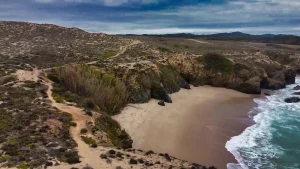
The future of nature tourism isn’t just about looking at the landscape or fixing past damage. It’s about taking care of it in every detail, with every partner we choose, and with every step we take.
Next time you lace up your boots to explore our coast, what kind of footprint do you want to leave behind?
João, Founder of Hike Time Portugal

 Carnaxide – Sines / Portugal
 +351 918 232 292
 geral@hiketime.pt


